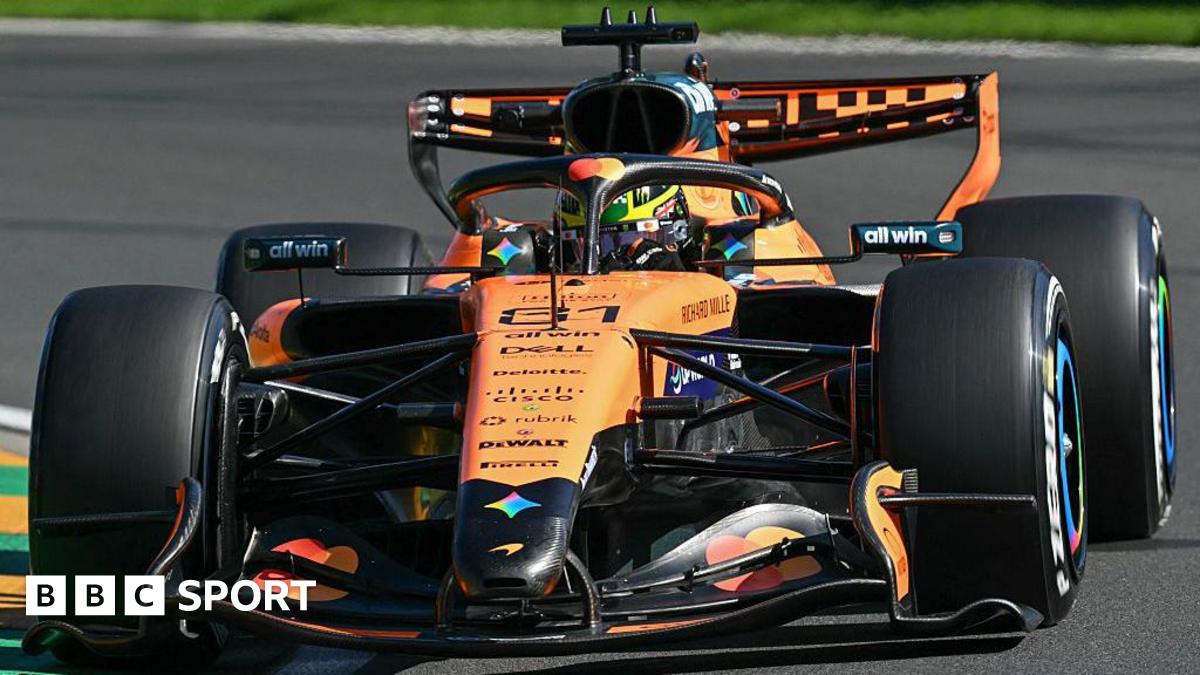
F1 Australia: First Glimpse of New Regulations & Grid Order for the 2026 Season
The roar of engines, the scent of high-octane fuel, and the palpable tension of a new beginning – it all culminates in Melbourne as the Formula 1 circus descends upon the iconic Albert Park Circuit for the F1 2026 opening race. This isn't just another season opener; it's the dawn of a revolutionary era in Formula 1. With sweeping new technical regulations, the highly anticipated debut of an 11th team, and significant power unit shifts, the Australian Grand Prix promises an unparalleled spectacle that will set the tone for the entire championship.
For fans and pundits alike, the F1 2026 Australian GP is more than a race; it's the first real test, the initial unveiling of who truly nailed the new rulebook. The strategic gambles, the engineering prowess, and the driver adaptation will all be on full display in what is historically one of the calendar's most thrilling and unpredictable events. Get ready to witness history unfold in a championship year poised to redefine the pinnacle of motorsport.
The Dawn of a New Era: Understanding F1's 2026 Regulations
The 2026 Formula 1 season marks a seismic shift in the sport's technical landscape. At its core, the new regulations are designed to foster closer racing, promote sustainability, and make the sport more attractive to new manufacturers. While specific details continue to emerge, the overarching changes focus heavily on revised aerodynamic principles and significantly altered power unit specifications.
- Power Unit Overhaul: The most impactful change centers around the hybrid power units. The new generation of engines is expected to feature a greater emphasis on electrical power, potentially reducing reliance on the MGU-H component and increasing the overall electrical output. This shift not only aligns with broader automotive industry trends towards electrification but also aims to lower costs and complexity, making F1 a more attractive proposition for new engine suppliers like Audi and potentially Cadillac. The strategic implications for teams are immense; those who develop a dominant and reliable power unit will have a significant advantage in the F1 2026 season opener.
- Aerodynamic Tweaks: While specific details are still being finalized, expect revised aerodynamic rules aimed at reducing 'dirty air' and improving the ability of cars to follow each other closely. This could involve smaller or simpler front and rear wings, changes to floor designs, and an overall reduction in downforce-dependent performance. The goal is to encourage more wheel-to-wheel racing and elevate driver skill over aero trickery. Teams will have to rethink fundamental car design principles, potentially leading to radically different-looking machinery.
- Strategic Challenges: These profound changes present an unprecedented challenge for teams. Development budgets will be stretched, and the learning curve will be steep. The ability to interpret the regulations effectively, innovate within their boundaries, and quickly adapt development pathways will be critical. The team that arrives in Melbourne with the most optimized package, both mechanically and aerodynamically, could establish an early lead that is difficult to overturn.
The F1 2026 opening race will thus be a crucial barometer, offering the first real glimpse into which teams and power unit manufacturers have hit the ground running under this new paradigm. It's a clean slate, and every team will be looking to stake their claim early.
Albert Park Circuit: A Transformed Challenge for the F1 2026 Opening Round
The traditional venue for the Australian Grand Prix, the Albert Park Circuit in Melbourne, is a fitting stage for this momentous season opener. Nestled around the picturesque Albert Park Lake, this semi-urban circuit is renowned for its blend of high-speed sections, technical braking zones, and challenging fast corners. With a length of approximately 5.3 kilometers, it demands precision, courage, and a finely balanced car setup.
Crucially, the circuit has undergone significant layout changes in recent years. These modifications, including widening of certain sections and the removal of chicanes, were implemented to make the track faster and, more importantly, to facilitate better overtaking opportunities. This commitment to improving racing quality means that even under a new set of regulations, Albert Park is primed to deliver thrilling on-track action.
Looking back at recent history, the 2025 F1 Australian Grand Prix saw Max Verstappen and Red Bull clinch a dominant victory, demonstrating flawless strategy and superior pace. However, the battles raging behind him, involving multiple top teams, highlighted the fierce competition that is a hallmark of this event. This historical context underscores the circuit's ability to host intense, multi-car duels, a factor that will only be amplified by the unpredictability of new regulations and an expanded grid for the F1 2026 season opener.
Expect Albert Park to test the new generation of F1 cars to their limits. The high-speed nature will challenge the effectiveness of new aerodynamic concepts, while the demanding braking zones will scrutinize revised power unit deployment strategies. Its unique characteristics ensure that the Australian Grand Prix will remain one of the most unpredictable and spectacular events on the Formula 1 calendar.
The Eleventh Team & Shifting Grid Dynamics
One of the most exciting and talked-about developments for the 2026 season is the official entry of an 11th team onto the Formula 1 grid. While the specific identity of this new contender (with names like Cadillac/Andretti and Audi being prominent in discussions) brings a fresh wave of anticipation, its impact on the established order cannot be overstated.
The addition of another team signifies:
- More Competition: An extra two cars on the grid means more drivers vying for points, more strategic headaches for existing teams, and potentially more drama throughout the field. It adds another layer of intrigue to qualifying and race day.
- New Blood and Fresh Perspectives: A new team often brings innovative approaches, different philosophies, and a hunger to prove themselves. This injection of fresh energy can push established teams to elevate their game further.
- Manufacturer Engagement: The involvement of major automotive manufacturers, whether as full works teams or power unit suppliers (like Audi's confirmed entry and potential Cadillac involvement), adds significant weight and resources to the sport. This competition among manufacturers is a key driver of innovation and performance.
The F1 2026 opening race in Australia will be the crucial moment where we finally see this expanded grid in action. Will the new team immediately challenge the mid-field, or will they face an initial uphill battle? How will the increased traffic and competition impact race strategy and driver behavior, especially on a circuit like Albert Park known for its tight racing?
This expansion, combined with the new regulations, means the grid order for 2026 is a blank canvas. Past performance is no guarantee of future success, and teams that have struggled in previous seasons could find their stride with the new rules. Conversely, dominant teams will have to work harder than ever to maintain their advantage. The thrill lies in the unknown, and Melbourne is where those unknowns begin to unravel.
Essential Viewer Information: Schedule, Start Times & How to Watch
For those eager to catch every moment of the revolutionary F1 2026 opening race, it’s vital to be prepared. The FIA has confirmed the official Grand Prix start times for the 2026 Formula 1 season, and Australia kicks off the action.
- Dates: The 2026 Australian Grand Prix will run from March 6-8, 2026.
- Key Times (Local Melbourne Time, March 8):
- Qualifying: Scheduled for 16:00 local time.
- Main Race: Will commence at 15:00 local time.
For fans in Europe and other time zones, be ready for an early start! Melbourne's time difference often means setting alarms for the early hours of the morning to catch the live broadcast. However, the excitement of seeing a completely new era of F1 unfold makes it entirely worthwhile.
The race will be broadcast on usual F1 broadcasters across various regions. Check your local listings closer to the date for precise channel information. Many F1 fans also opt for the official F1 TV Pro subscription, which offers live streaming, on-demand content, and access to all onboard cameras and team radio communications.
Practical Tip: Even if you can't watch live, stay off social media until you've caught up! Replays will be available on official platforms, ensuring you don't miss any of the action or the crucial first insights into the new grid order. For a more detailed breakdown of timings and viewing options, check out our comprehensive guide: F1 2026 Australian GP: Schedule, Start Times & What to Know. For a broader overview of the season's significant changes, read F1 2026 Season Kicks Off: New Rules, New Teams at Australia GP.
The F1 2026 opening race in Australia is shaping up to be one of the most significant season openers in recent memory. With radical technical regulations, the thrill of an expanded grid, and the ever-present challenge of Albert Park, motorsport enthusiasts worldwide are on the edge of their seats. This isn't just a race for points; it's a battle for early supremacy, a chance to lay down a marker for a season that promises unprecedented excitement, unpredictability, and a fascinating re-shaping of the Formula 1 landscape. Don't miss the first glimpse of the future.